
Designing Scalable AV for Every Room
Take a quick walk around your office.You’ll probably see a large boardroom with a polished setup, a few meeting rooms that work “most of the time,” and huddle spaces where people still rely on laptop speakers and hope for the best. That mix is more common than you think. As offices grow and collaboration styles change, AV systems often evolve in bits and pieces, not as a unified plan. And that’s where problems start creeping in. So the real question isn’t whether you need AV in every room. It’s how to design AV that works consistently across every space without becoming a support nightmare.
The Reality of Multi-Room AV Today
Hybrid work has completely changed how meeting spaces are used. According to insights from AVIXA, most meetings today happen in small and mid-sized rooms, not large boardrooms. In fact, huddle and small meeting rooms now make up more than 70 percent of modern meeting spaces. At the same time, only a small percentage of meeting rooms are fully video-enabled, which is why many organizations are now upgrading AV across multiple rooms at once.
The challenge is how those upgrades happen. In many organizations, AV is added room by room, often with different brands, different controls, and different user experiences. Over time, that leads to:
- Meetings that feel different in every room
- Higher IT support calls
- Confused users
- Difficult upgrades later on
Ideally, a meeting should feel familiar whether you’re in a boardroom or a four-person huddle space.
Why Scalable AV Design Actually Matters
Scalable AV doesn’t mean putting the same equipment everywhere. It means designing a repeatable AV approach that adapts to different room sizes while keeping the experience consistent. Research from IDC shows that organizations that standardize collaboration technology see faster deployments and lower operational costs over time.
When AV is designed to scale, organizations benefit from:
- A consistent meeting experience across the office
- Simpler IT support and troubleshooting
- Lower long-term costs
- Easier expansion to new floors or locations
For large enterprises and government departments, this approach isn’t just smart. It’s essential.
Designing AV by Room Type, Not by Guesswork
A good AV strategy starts by accepting one simple truth. Not all rooms are meant to do the same job.
Boardrooms
Boardrooms are high-stakes spaces. Leadership reviews, client presentations, and critical discussions all happen here. That’s why boardrooms often use enterprise-grade collaboration platforms from Cisco, paired with advanced control and automation from Crestron. Large professional displays from Samsung help ensure clarity, visibility, and impact during presentations. The focus here is reliability, presence, and confidence.
Meeting Rooms and Training Rooms
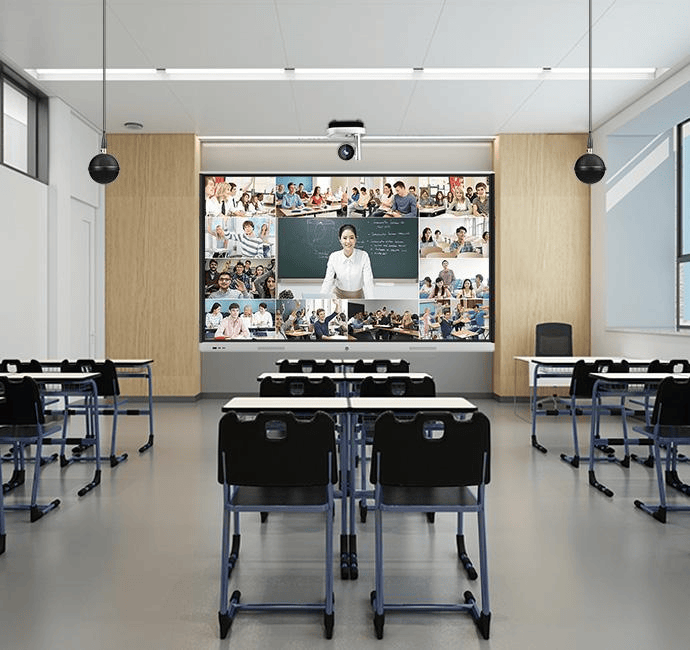
These rooms handle everyday collaboration. Reviews, workshops, internal discussions, and hybrid calls happen back-to-back. Commercial display solutions from LG, combined with standardized conferencing and control logic, help these rooms stay flexible without becoming complicated. When meeting rooms follow a common design template, users don’t need to “relearn” the room every time. They walk in and get started.
Huddle Rooms
Huddle rooms are all about speed. Industry studies show that most meetings involve four people or fewer, which explains why huddle spaces are growing so fast. The goal here is simple.
Walk in. Connect. Start talking.
Scalable AV design ensures huddle rooms follow the same logic as larger spaces, just with fewer components.
Why Standardization Makes Multi-Room AV Work
This is where many organizations either get it right or struggle later. Instead of designing each room separately, successful organizations define standard room templates, such as:
- Huddle room standard
- Meeting room standard
- Boardroom standard
AVIXA recommends this template-based approach for organisations managing large AV environments. Once these templates are defined, rolling out AV becomes faster, cleaner, and far more predictable.
Control and User Experience: Where Most AV Projects Win or Fail
AV systems usually don’t fail because of hardware. They fail because users find them confusing. Centralised AV control platforms help solve this by delivering:
- One-touch meeting starts
- The same interface in every room
- Remote monitoring for IT teams
- Faster issue resolution
According to Astute Analytica, demand for AV control systems is growing rapidly as enterprises look for better visibility and automation. Simply put, when AV is easy to use, people trust it.
Why Centralized AV Management Is Becoming Essential
As AV deployments grow, organizations want to know what’s happening across all rooms. Industry analysis from Omdia shows that centralized AV monitoring significantly reduces downtime and support effort in large deployments.
This gives organizations:
- Predictive maintenance instead of reactive fixes
- Better visibility into room usage
- Smarter planning for future expansion
For IT teams, this is a huge win.
How Mentor Infocomm Approaches Scalable AV Design
At Mentor Infocomm, we don’t design AV room by room. We design AV ecosystems.
Our approach focuses on:
- Understanding how people actually collaborate
- Creating repeatable AV standards
- Standardising hardware, software, and controls
- Aligning AV with IT and network teams
- Providing long-term AMC and managed support
Whether it’s one office or multiple locations, our goal stays the same. Every room should work the same way, every time.
Design Once. Scale Everywhere.
As organisations grow, offices change. Teams expand. Collaboration styles evolve. Scalable AV design ensures your workplace stays ready for what’s next, without constant rework. If your meeting rooms feel inconsistent, difficult to manage, or hard to scale, it might be time to rethink how your AV is designed. From boardrooms to huddle rooms, Mentor Infocomm helps you build AV that grows with your organization. And that’s how collaboration should feel.
Learn more about our AV Integration Solutions in Chennai
https://mentorinfocomm.com/products-and-solutions-details/audio-visual-system-integration






 Call Now